
Mould Removal & Remediation in Ottawa
HMRS finds the water source, contains the affected area, removes mould-damaged material, and documents the dry-down — because mould that is cleaned without fixing the moisture comes back in the same wall.
Governing instrument — No Ontario mould regulation — OHSA general duty
Dispatch — 24 hours
(613) 239-4728Answered at any hour, including through storm events. You are told a real attendance window on the call.
When you need mould remediation
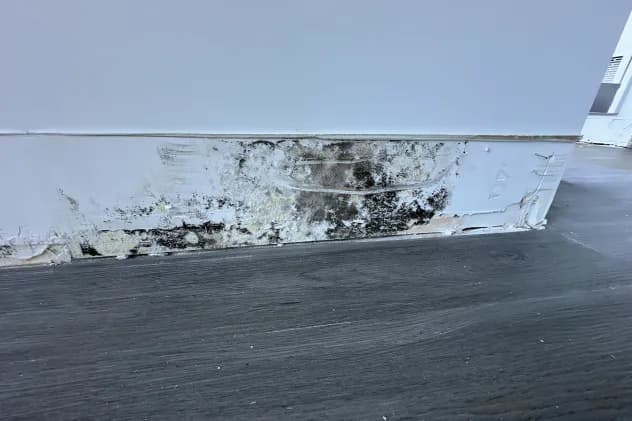
- 1Visible growth on drywall, framing, or ceiling tile after a leak.
- 2A persistent earthy or musty smell with no visible source.
- 3Staining or bubbling paint on a wall that was wet weeks ago.
- 4Attic sheathing that has gone dark or spotted.
- 5A basement that floods seasonally and never fully dries.
- 6Occupant complaints in a building after a roof or plumbing repair.
- 7A pre-purchase or pre-lease inspection that flagged suspected growth.
- 8Growth found behind a wall opened for unrelated mechanical work.
How a mould remediation runs
- 01
Find the water
Moisture mapping before anything is removed. Mould is a symptom; the leak, the condensation path, or the ventilation failure is the problem. Remediation that skips this step is a repaint on a schedule.
- 02
Assess the extent
How far the growth runs behind finished surfaces, what materials are affected, and whether asbestos-containing material is in the same assembly. In pre-1990 Ottawa buildings the two are frequently in the same wall, and finding out mid-removal changes the job into a Type 2 or Type 3 asbestos operation.
- 03
Contain
Polyethylene containment, negative air with HEPA filtration, and isolation of the air handling serving the area, sized to the extent of the growth. The point is that spores released during removal do not end up in occupied space.
- 04
Remove and clean
Porous material that has been colonised comes out — drywall, insulation, carpet, ceiling tile. Non-porous structure is cleaned rather than replaced where it is sound. HEPA vacuuming and damp wiping, not dry brushing.
- 05
Dry to a target
Drying continues to a documented moisture content, with readings logged over the dry-down rather than a single reading at the end. A wall that reads dry on the surface and wet in the cavity is the most common reason a remediation fails.
- 06
Verify and hand back
Post-remediation verification appropriate to the scale of the work, with the moisture log, photo progress, and scope of what was removed. Then reconstruction, on the same file where you want it run that way.
Why property managers and adjusters call HMRS
- The moisture source is part of the scope
- Remediation that does not identify why the assembly got wet is a repaint. Moisture mapping comes before removal, and the reading log is part of the closeout.
- Mould and asbestos scoped together
- In pre-1990 Ottawa stock the two turn up in the same wall. Both are assessed on one visit, so containment is built once for the right classification.
- Documentation an insurer and a property manager can both use
- Moisture readings over the dry-down, photo progress, and a written scope of what was removed. Pre-loss condition is the standard.
- Straight about what is and is not regulated
- Ontario has no mould regulation. HMRS says so, then explains what standard the work is actually being held to, rather than implying a legal clearance requirement that does not exist.
Common questions
01Is mould regulated in Ontario the way asbestos is?
No. Mould is not one of the eleven designated substances under O. Reg. 490/09, and there is no Ontario regulation setting containment classes or clearance criteria for mould the way O. Reg. 278/05 does for asbestos. Mould work is governed by the general duty provisions of the Occupational Health and Safety Act together with industry guidelines. Any contractor quoting you a legally mandated mould clearance number is describing a guideline, not a regulation.
02Do I need air testing for mould?
Sometimes, and less often than it is sold. Air sampling is useful for establishing a baseline in a dispute, for verifying work in a sensitive occupancy, or where growth is suspected but not visible. It is a poor substitute for finding the moisture source, and a clean air sample in a room with a wet wall cavity tells you very little.
03Can I just clean it with bleach?
On a small, non-porous surface with a known and corrected moisture source, surface cleaning is reasonable. On porous material like drywall or insulation, bleach wets the substrate and treats the visible face while the colonisation continues behind it. The material has to come out.
04How do I know if there is asbestos in the same wall?
In an Ottawa building built before 1990, assume it is possible until sampling says otherwise. Drywall joint compound, vinyl floor tile and mastic, pipe insulation, and textured ceilings are all common asbestos-containing materials in the same assemblies where mould shows up after a leak. HMRS scopes both on one visit rather than discovering the second one after containment is already built for the first.
05Will my insurance cover mould remediation?
It depends on the cause and the policy. Mould arising from a sudden covered water loss is treated differently from mould arising from long-term seepage or deferred maintenance, and most policies say so explicitly. What helps a claim is documentation showing when the water event happened and what was done about it, which is a reason to document the dry-down properly rather than after the fact.
06Does the building have to be vacated?
Usually not. Most occupied-building mould work is done by isolating the work area under negative pressure and shutting down the air handling that serves it. What needs deciding early is the route in and out for waste and whether any shared mechanical system connects the area to occupied space.
07How long before we can use the space again?
Removal is often the short part. Drying to a documented target is what sets the schedule, and it depends on the material, the extent of saturation, and how long the assembly was wet before anyone called. HMRS gives a stage-by-stage schedule at scoping rather than a single number.
08What causes attic mould in Ottawa specifically?
Warm humid air leaking from the living space into a cold attic and condensing on the underside of the sheathing. It is a ventilation and air-sealing problem more often than a roof leak, which is why cleaning the sheathing without correcting the air path produces the same result the following winter.
Related services
- Water DamageThe water loss that came first. Extraction and controlled drying before mould has somewhere to start.
- Asbestos AbatementType 1, 2 and 3 work under O. Reg. 278/05, frequently in the same assembly as the mould.
- Winter ResponseSeasonal vacancy, humidity, and no airflow — the closed-up building that comes back to mould in spring.
- ReconstructionRebuilding what came out, run on the same file as the remediation.
Dispatch
Mould remediation across Ottawa, Gatineau, and Eastern Ontario, from a single wall cavity to a multi-unit building. Call for dispatch, or request a site assessment and a written scope.