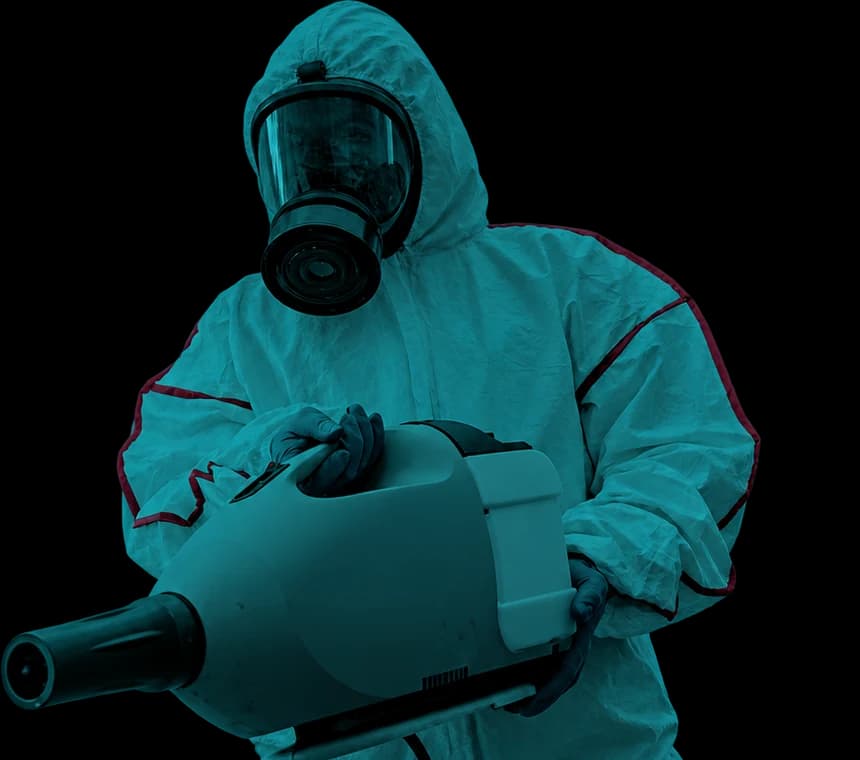
Biohazard & Trauma Scene Cleanup in Ottawa
HMRS handles trauma scenes, bodily fluid contamination, sewage, drug residue, and hoarding conditions in Ottawa — removing contaminated material, disinfecting the structure, and returning the space to use with a documented scope.
Dispatch — 24 hours
(613) 239-4728Answered at any hour, including through storm events. You are told a real attendance window on the call.
What this covers
- 1Death in a residence, discovered late or otherwise.
- 2Blood and bodily fluid contamination after an injury or incident.
- 3Crime scene cleanup after police release the property.
- 4Methamphetamine and fentanyl residue in a former lab or use site.
- 5Sewage backup through a floor drain or fixture.
- 6Hoarding conditions with biological contamination underneath.
- 7Odour with a biological source that persists after cleaning.
- 8A tenanted unit that cannot be re-let in its current condition.
How a biohazard file runs
- 01
Assess and isolate
What the contaminant is, how far it has travelled into the structure, and what has absorbed it. Containment goes up before anything is disturbed, and air handling serving the area is shut down or isolated.
- 02
Remove what cannot be cleaned
Porous material that has absorbed biological contamination comes out — carpet and underlay, upholstered furniture, drywall, insulation, and subfloor where saturation has reached it. Cleaning a porous surface that a fluid has soaked into treats the face and leaves the rest.
- 03
Clean and disinfect the structure
Hard surfaces cleaned, then disinfected with products appropriate to the contaminant. Cleaning first, because disinfectant applied over organic soil is largely spent before it reaches anything.
- 04
Address the odour source
Biological odour comes from residue, not from air. It resolves when the source is gone and the affected substrate is sealed. Fragrance over an untreated source is a delay, not a result.
- 05
Dispose under the applicable stream
Biohazardous waste is contained, labelled, and routed to the appropriate disposal stream rather than into general construction waste. Documentation of disposal is part of the file.
- 06
Verify and return the space
Post-cleaning verification appropriate to the contaminant, with a written scope of what was removed and photo documentation. Then reconstruction where the removal has left the space needing it.
Why property managers and adjusters call HMRS
- 24/7 attendance and discretion by default
- Unmarked arrival on request, no signage identifying the work. Dispatch answered live at any hour.
- Removal decisions made on absorption, not appearance
- Porous material that a fluid has reached comes out. Surface cleaning of an absorbed contaminant is the most common failure in this work.
- Documented scope and disposal
- Written record of what was removed, how it was disposed, and what verification was done — for the insurer, the estate, or the property manager.
- Reconstruction on the same file
- Removal frequently leaves a unit needing floor, drywall, and finishes. That work runs on the same file rather than being handed off.
Common questions
01Do the police or the coroner clean the scene?
No. Police and coroners investigate and release the property. Cleaning and remediation are the responsibility of the property owner or the estate, which is why families and property managers usually encounter this at the point the scene is released to them with no guidance.
02Is this covered by insurance?
Often, under the property policy, and some policies name trauma cleanup specifically. Coverage varies considerably and the answer depends on the policy and the circumstances. HMRS documents the scope so it can be submitted, but the coverage determination sits with the insurer.
03How discreet is the work?
Unmarked arrival where you ask for it, and no signage identifying what the work is. In a multi-unit building this matters practically as well as personally, and it is worth stating on the call so the site setup accounts for it.
04Why does so much material have to be removed?
Because porous material absorbs. A fluid that has reached carpet underlay, drywall, or subfloor is inside the material, not on it. Surface cleaning removes what is visible and leaves the contamination that produces the odour and the health risk. Removing and replacing is both the safer and the cheaper outcome.
05What is involved in drug residue remediation?
Methamphetamine and fentanyl production and use leave residue on surfaces and in ventilation throughout a space. Assessment establishes the extent, contaminated porous material is removed, hard surfaces are cleaned and disinfected, and ventilation components are addressed. Fentanyl in particular is a hazard to anyone cleaning without appropriate protection, which is the reason this is not a job to hand to a general cleaner.
06How quickly can you attend?
Dispatch is answered 24 hours a day. For a scene that has just been released, or for a sewage backup in an occupied building, attendance is treated as urgent.
07Can a hoarding cleanup be done gradually?
Yes, and it often should be, particularly where the occupant is still in the home and involved in decisions about what is kept. What cannot be staged is biological contamination underneath — sewage, animal waste, or decomposition — which is remediated as its own scope regardless of the pace of the rest.
08Will the smell definitely be gone?
If the source is removed and the affected substrate is sealed or replaced, yes. If odour persists after cleaning, it means residue remains somewhere — commonly in a subfloor, in a wall cavity, or in ductwork — and the correct response is to find it rather than to treat the air again.
Related services
- Water DamageSewage backup and category three water, where removal replaces drying.
- Mould RemovalGrowth found under hoarding conditions or after prolonged contamination.
- ReconstructionRebuilding a unit after removal, so it can be re-let or reoccupied.
- 24/7 Emergency24/7 dispatch across Ottawa and Gatineau for anything that cannot wait.
Dispatch
Biohazard and trauma cleanup across Ottawa, Gatineau, and Eastern Ontario. Call any hour for dispatch. Unmarked attendance on request.